
Jürgen Klopp’s latest national squad announcement highlights the intense Germany talent competition in modern football. Many players selected could also represent other countries. This situation draws significant attention from various national team coaches globally.
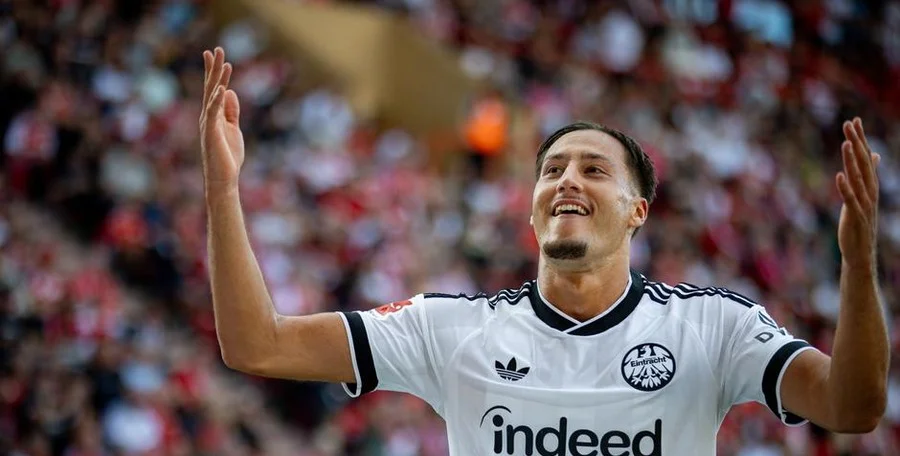
For example, Morocco’s coach, Mohamed Ouahbi, had already tracked Eintracht Frankfurt striker Younes Ebnoutalib. “He showed a profile that interested us,” Ouahbi stated. “I discussed Morocco’s project with him, without making promises.” Ebnoutalib, 23, will be cap-tied to Germany if he plays in the upcoming UEFA Nations League matches, making him ineligible for Morocco.
This scenario is becoming increasingly common. Many German players hold dual citizenship through their parents. Consequently, they possess multiple options for their international careers.
Klopp’s 44-man squad includes several such individuals. Vitaly Janelt, whose father played ice hockey in Germany, could represent Czechia. Bambase Conte has Guinean roots, and Josha Vagnoman’s father is Ivorian. Goalkeeper Finn Dahmen has an English mother, while Noah Atubolu has Nigerian ancestry. Said El Mala’s father is from Lebanon, and Brajan Gruda’s father was an Albanian international. All these players were born and raised in Germany, representing the country at youth levels. Vagnoman even has two senior Germany caps, though none in competitive games.
Numerous established Germany players also had other national team options. These include Felix Nmecha (England), Kevin Schade (Nigeria), and Jamal Musiala (Nigeria, England). Karim Adeyemi could play for Nigeria or Romania, while Jonathan Tah and Serge Gnabry could represent Ivory Coast. Malick Thiaw (Senegal, Finland), Nathaniel Brown (USA), Nadiem Amiri (Afghanistan), Aleksandar Pavlovic (Serbia), Waldemar Anton (Russia), Yann Aurel Bisseck (Cameroon), and Ridle Baku (DR Congo) faced similar choices.
The national team mirrors German society’s diversity. Over 21 million of Germany’s 83 million inhabitants have an immigrant background. “More than 40% of children under five have a migration background,” explained Andreas Rettig, DFB’s managing director for sport. “They will later have the option to play for one country or the other.”
This growing trend fuels the Germany talent competition, forcing the DFB to actively vie for promising players. The association has not always been successful. Ibrahim Maza, a promising midfielder, chose Algeria two years ago despite being eligible for Germany. He went on to play in the Africa Cup of Nations and the World Cup for Algeria.
Germany also missed out on other talents. Bayern Munich’s Paul Wanner opted for Austria, his mother’s homeland. Can Uzun of Eintracht Frankfurt has played for Turkey since September 2024. Both participated in last summer’s World Cup.
The current international break offers an opportunity for cap-tying. With four matches scheduled, Klopp named two squads, increasing playing time chances for all. Upcoming UEFA Nations League fixtures against the Netherlands, Greece, and Serbia are all competitive. Therefore, Klopp may solidify more players’ commitments to Germany through these crucial games.


